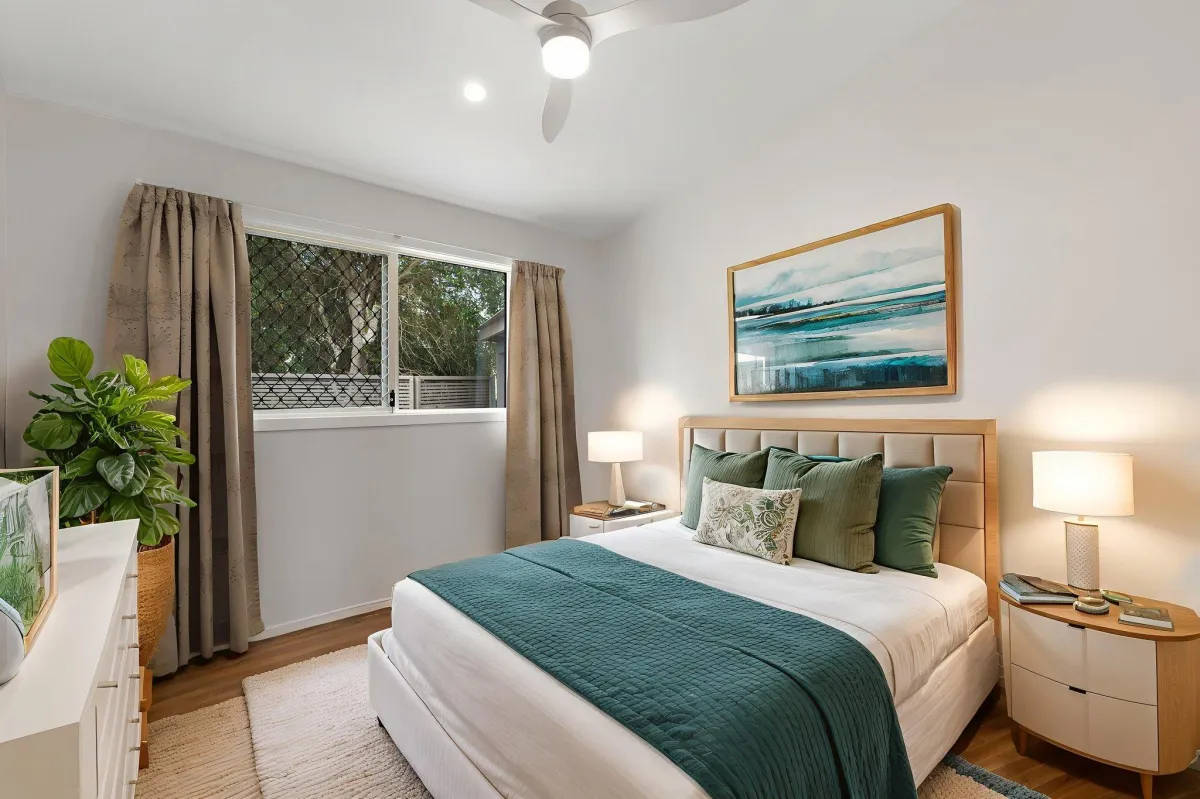
What Is Virtual Staging? A Guide for Auckland Agents
There are currently 29 weeks of stock on the Auckland market (Opes Partners). This is well above the long-term median of 22 weeks. Residential properties in Auckland are taking an average of 49 days to sell (Bamboo Routes), compared to the historical average of 37. Buyers have more choice, more time, and more negotiating power than at any point in the last decade.
In that environment, the listings that move fastest share one thing: they look better online than the competition. Not just better photography, but better presentation. And for vacant properties, tenanted homes, and new build developments, that's where virtual staging changes the equation entirely.
What Is Virtual Staging?
Virtual staging is the process of digitally furnishing and styling property photos using professional editing software. A photographer captures the empty or existing space, and an editor digitally adds furniture, soft furnishings, artwork, rugs, and décor. This produces images that show the property as though it has been professionally staged, without a single piece of physical furniture being moved.
The result is a set of photo-realistic listing images that help buyers visualise how a space can be used, how large it actually feels when furnished, and what the lifestyle in that home could look like. For an agent with a vacant listing, it removes the single biggest barrier between a browser and a booking — an empty room that tells no story.
Virtual staging isn't a substitute for good photography. Rather, it builds on it. The base images need to be well-lit, properly exposed, and captured at the right angles. The virtual staging then layers a lifestyle narrative on top of that foundation. You can see examples of what this looks like on our Virtual Staging service.
Does Virtual Staging Actually Work? The Evidence
The short answer is yes — and the data behind it is more compelling than most agents expect.
According to the 2025 NAR Profile of Home Staging, 83% of buyers' agents said home staging makes it easier for buyers to visualise the property as a future home. This applies to physical and virtual staging alike. The psychological effect of seeing a furnished room is consistent regardless of whether the furniture is real or digital.
Staged homes (including virtually staged ones) sell faster than unstaged properties, and staged listings can sell for up to 5% to 20% more compared to non-staged listings. Styldod
On digital engagement specifically, the numbers are striking. Virtually staged photos generate 40% more online views and inquiries compared to unstaged listings. In a market where visits to realestate.co.nz are tracking 12.4% higher than the same time last year (Scoop), those additional views translate directly into more open home bookings and more competitive tension around your listing.
For context on what a modest price improvement means in Auckland: the median Auckland house price is currently $950,000. A 3% increase on that figure is $28,500. The cost of virtual staging a full home is a fraction of that.
The maths isn't complicated. The question isn't whether virtual staging works, but rather if the property is the right fit for it.
How Virtual Staging Works: The Process
Understanding the mechanics matters because agents often assume virtual staging requires a separate shoot or special equipment. It doesn't.
Step 1 — Photography first. Virtual staging works from standard listing photos. If you're already booking a shoot with us, virtual staging can simply be added to the package. If you have existing photos that meet quality requirements (correct exposure, wide angles, good lighting) we can often work from those too without a return visit.
Step 2 — Style selection. Before editing begins, we'll ask a few quick questions about the property and the target buyer. A contemporary Takapuna townhouse calls for a different look than a family home in Titirangi. Matching the staging style to the property's architecture and its likely buyer demographic is what separates professional virtual staging from generic results. It's also what produces images that feel authentic rather than being overly computer-generated.
Step 3 — Editing and delivery. Our editors digitally furnish each selected room by placing furniture to scale, adjusting lighting to match the original photograph, and styling each space with a cohesive interior direction. Staged images are delivered to your client portal within 24 hours, ready to use across Trade Me, realestate.co.nz, social media, and print.
How AI Is Changing Virtual Staging
The standard for virtual staging has shifted significantly in the last few years, and AI is the reason. What used to require multiple days of manual editing can now be produced faster, with greater consistency, and with results that are increasingly difficult to distinguish from photographs of physically staged rooms.
For agents, this has three practical implications. First, the quality ceiling has risen. AI-assisted editing produces more accurate lighting, better-scaled furniture placement, and more realistic shadow and texture detail than was achievable with purely manual techniques even a few years ago. The results look less like "computer-generated staging" and more like the real thing — which matters, because buyers are sophisticated enough to notice when staging looks artificial.
Second, the same room can now be staged from multiple angles within a single session. Rather than producing one staged image of a living area, we can produce three or four from different positions in the room, at different focal depths, giving your listing a more complete and immersive visual story without requiring additional photography time on site.
Third, and perhaps most usefully for agents marketing vacant properties, the virtually staged photos can now be transformed into virtually staged video snippets. Instead of a buyer scrolling through a series of still images of a furnished room, they can watch a short walkthrough video of those same staged rooms in motion. This gives the listing the engagement power of video without the cost and logistics of a physical shoot in a staged property. For developments and vacant listings in particular, this closes the gap between what a property looks like on paper and what a buyer can emotionally connect with before stepping through the door.
The net result is faster delivery, richer visual output, and a more complete marketing package — all built from the same base photography session.
When Does Virtual Staging Make Sense?
Not every listing needs virtual staging. But there are four situations where it consistently delivers the clearest return.
Vacant Properties. When a vendor has already moved out, an empty house creates two problems: it looks smaller in photographs than it actually is, and buyers have nothing to emotionally connect with. Physical staging solves both. But it requires sourcing, delivering, and installing furniture, then coordinating its removal once the property sells. For a vendor already paying holding costs every week the property sits on the market, virtual staging delivers the same visual outcome without the logistics, the expense, or the waiting.
New Build Developments and Townhouses. Auckland's townhouse boom has created a specific challenge for agents and developers. If you're marketing five, ten, or fifteen homes in a single development, physically staging each one is either impossibly expensive or impractically slow. Virtual staging solves this at scale. The same photography session can produce a fully staged set of images for every unit in the development, with each room styled in a consistent and appealing interior direction. It's the highest-return application of virtual staging available in Auckland's current market. At times, Agents find a middle ground by physically staging one or two of the townhouses in a large development and virtually staging the rest.
Tenanted and Occupied Properties. Many properties sold in Auckland are still occupied either by the vendor or a tenant. Lived-in spaces often present challenges: cluttered surfaces, mismatched furniture, or rooms being used in ways that don't photograph well. In these situations, virtual staging is combined with virtual decluttering. This means digitally removing unwanted items and replacing them with clean, cohesive furnishings. The result is a polished set of listing photos that represent the property's true potential without disrupting the occupant or requiring a staging company to visit at all.
Properties With Dated Furnishings. An occupied home where the current furniture is tired, oversized, or simply doesn't suit the property's architecture can leave buyers focused on what needs to change rather than what they'd love about the home. Virtual staging allows you to show the property with updated, appropriate furnishings while still selling it in its current condition. This gives buyers a vision of the space's potential rather than a reminder of the previous occupant's taste.
Virtual Staging vs Physical Staging: Cost in Context
Physical home staging in Auckland typically costs between $2,000 and $5,000 for a standard residential property, depending on the number of rooms, how long the staging period runs, and which stager you use. For larger properties or longer campaigns, the cost can exceed this significantly.
Virtual staging costs a fraction of that. At Bash & Co, virtual staging starts from $30 per room for individual rooms and from $280 for a full home package for properties with three bedrooms or fewer.
The relevant comparison isn't just cost, but it's cost relative to outcome. Virtual staging delivers staggering returns, often between 500% and 3,600%. As an example, a $350 virtual staging investment on a $400,000 home could yield $4,000 to $40,000 in added value.
The other cost factor worth considering is time. Physical staging requires scheduling, delivery, installation, and eventual removal often spanning multiple days. Virtual staging requires none of that. Once the photos exist, the process is entirely managed in post-production. For agents working in a market where properties are already taking an average of 49 days to sell, removing unnecessary delays from the marketing timeline matters.
Cost is only part of the picture — for when each approach actually suits a listing, see home staging vs virtual staging.
What to Look for in a Virtual Staging Service
Not all virtual staging is equal. The difference between professional results and unconvincing results comes down to three things.
Quality of the base photography. Virtual staging can only be as good as the photos it's applied to. Poorly exposed images, distorted wide-angle shots, or photos taken without regard for natural light will produce staged results that look artificial regardless of the editing skill applied. This is why virtual staging and listing photography should ideally come from the same provider — the photographer knows what the editor needs.
Hand-editing vs automated AI tools. AI staging tools are proliferating rapidly and they have their place. They are fast, cheap, and useful for certain applications. But for primary listing photos on a property where the sale price is measured in the hundreds of thousands, automated results rarely meet the standard required. Hand-edited virtual staging, where an experienced editor works through each image individually, produces results that are consistently photo-realistic and correctly scaled. Our virtual staging is hand-edited, building on HDR base photography to ensure the staged rooms match the original lighting conditions precisely.
Turnaround time. Real estate moves fast. A virtual staging service that takes five to seven days doesn't serve agents working in a market with active buyer competition. We deliver staged images within 24 hours of receiving the photography. Virtually staged videos, where the staged images are brought to life as a furnished walkthrough, are delivered within 72 hours.
Virtual Staging and the REA Guidelines: What New Zealand Agents Need to Know
Disclosure is non-negotiable. The Real Estate Agents Act and REA Code of Conduct require agents to present properties accurately and avoid misleading representations. Virtually staged images must be clearly disclosed as digitally enhanced, both in the listing description and, ideally, by showing the unedited version alongside the staged version.
On Trade Me and realestate.co.nz, this is best handled by including both the staged and unstaged versions of key rooms in the photo gallery, with a clear caption identifying which images are virtually staged. This is standard practice across the industry and, done properly, it actually builds buyer trust rather than eroding it. An agent who is transparent about their marketing tools is an agent who appears confident and professional.
What virtual staging should never do is conceal defects, remove structural features, or present the property in a way that creates a materially false impression of its condition. Staging an empty room with furniture is enhancement. Removing a crack in a wall is misrepresentation. The line is clear and every professional virtual staging provider should be working on the right side of it.
If you're ready to see what virtual staging looks like in practice, or you have a listing in mind and want to discuss whether it's the right fit, visit our Virtual Staging service page for full details, pricing, and booking.
Frequently Asked Questions
Can I use virtually staged images on Trade Me and realestate.co.nz?
Yes. Both platforms allow virtually staged images, provided they are clearly disclosed as digitally enhanced in the listing description. This is standard practice and is required under REA guidelines. A simple note in your listing description — "some images are virtually staged" — is sufficient.
What's the difference between virtual staging and virtual decluttering?
Virtual staging adds furniture and décor to an empty room. Virtual decluttering removes items from an occupied room by clearing surfaces, removing personal belongings, or tidying a space digitally so it photographs better. Both services can be combined for tenanted properties, producing a clean and furnished set of listing photos without any physical intervention at the property.
How many rooms should I stage?
For most listings, staging the living area, master bedroom, and dining space provides the most impact for the investment. These are the rooms buyers spend most time evaluating and the spaces where emotional connection is built or lost. Additional rooms — studies, secondary bedrooms, outdoor areas can be added based on the property and budget.
Does the furniture in the virtual staging need to match what's actually in the property?
No. Virtual staging is explicitly for marketing purposes and buyers understand this. The furniture shown is illustrative. It demonstrates scale, flow, and lifestyle potential. It does not need to match the property's actual contents, and it doesn't accompany the sale.
Can you virtually stage a property I've already photographed with another photographer?
In some cases, yes. It depends on the quality and resolution of the existing images. Send them through and we can assess whether they meet the requirements for professional virtual staging results.
How long does virtual staging take?
Staged images are delivered within 24 hours of receiving the photography. Virtually staged video, where the staged rooms are produced as a furnished property walkthrough, is delivered within 72 hours.
Is virtual staging worth it for lower-value properties?
The return on investment case for virtual staging is actually strongest for mid-market properties. Luxury listings have more margin to absorb physical staging costs, but for a property priced between $500,000 and $900,000 in Auckland, a virtual staging investment of a few hundred dollars against a potential sale price improvement of tens of thousands is a straightforward decision.