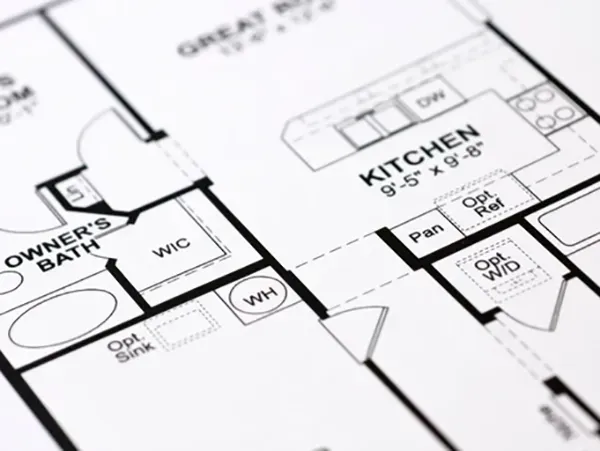
What Makes a Good 2D Floor Plan for a Real Estate Listing?
A good 2D floor plan does not need to look fancy. It needs to help a buyer make a decision.
Photos create the first reaction. They show light, styling, finishes, outlook, and condition. But once a buyer is interested, the next question is more practical: does this home actually work?
That is where the floor plan earns its place.
A 2D floor plan shows the layout from above. It gives buyers the room sizes, walls, doors, windows, storage, stairs, bathrooms, outdoor connections, and the relationship between spaces. It helps them work out whether the home suits their furniture, family, routine, work-from-home needs, and future plans.
For Auckland real estate agents, this matters because buyers are making decisions before they ever reach the open home. They are comparing listings on Trade Me Property, realestate.co.nz, agency websites, and saved-search emails. If the photos look good but the layout is unclear, some buyers will hesitate. If another listing gives them the full picture, that listing feels easier to trust.
realestate.co.nz has been clear about this shift. In a June 2026 article, Sarah Wood, CEO of realestate.co.nz, described floor plans as "completely underrated" and said they are part of the core information buyers want before viewing a property. The platform even uses AI to identify floor plans uploaded with listing images, then separates them into a dedicated tab so buyers can find them more easily.
The takeaway for agents: buyers now use the floor plan to decide whether a property is worth their time.
So what makes a good 2D floor plan?
A good 2D floor plan is clear before it is clever
A floor plan has one job: a buyer scrolling on a phone should understand it quickly.
It should be clean, legible, and easy to follow. Room labels should be obvious. Walls, doors, windows, stairs, bathrooms, wardrobes, kitchen benches, and outdoor areas should all read clearly at a glance.
The buyer should not have to decode it.
This is where some floor plans fail. They may technically show the property, but the text is too small, the proportions look strange, the labels are hard to read, or the outdoor areas are missing. A buyer should be able to open the floor plan and understand the home within a few seconds.
If they cannot, the floor plan is adding friction instead of removing it.
Room dimensions need to be useful, not just present
Room dimensions are one of the main reasons buyers open a floor plan.
They want to know whether the master bedroom fits a king bed, whether the second bedroom is genuinely usable, whether the living area can take their sofa, and whether the dining space works for how they live.
Include room dimensions in metres, easy to read, and attached to the right spaces. For most buyers, the exact number matters less than the confidence it gives them. A bedroom marked 3.0m x 3.2m feels very different from one marked 4.2m x 3.8m. A narrow lounge may photograph well, but the measurements show whether it will be practical.
This is especially important in Auckland, where buyers often compare very different property types in the same search: apartments, townhouses, cross-lease homes, villas, brick-and-tile units, and larger family homes. The photos may all look appealing. The floor plan helps the buyer compare the space.
Layout flow is what buyers are really checking
Room size is only half of it. Buyers are also checking how the home works and flows.
Can you move naturally from the kitchen to the dining area? Does the living room connect to the deck or garden? Are the bedrooms grouped together, or split across different ends of the house? Is the main bathroom in a sensible position? Can guests use a toilet without walking through a private bedroom? Is there internal access from the garage? Is the laundry tucked away or sitting in the middle of the house?
These questions are difficult to answer from photos alone because photos are selective. They show the room from the best angle. They rarely show the awkward hallway, the missing door, or the long walk from the kitchen to the outdoor area.
A 2D floor plan shows how you actually move through the home.
That does not mean every layout has to be perfect. Some buyers are happy to compromise. Some are looking for renovation potential. Some need separation for teenagers, flatmates, guests, elderly parents, or working from home.
But they need to know what they are dealing with.
Outdoor areas should not be treated as an afterthought
In Auckland, the relationship between indoor and outdoor space can change how a property feels.
A small home with direct access to a sunny deck can live larger than the square meterage suggests. A family home with no easy connection from the kitchen or living area to the backyard may feel less practical, even if the garden photographs beautifully.
Show outdoor areas clearly where they matter. Decks, patios, courtyards, balconies, garages, carports, garden access, and entry paths all help buyers understand the property.
This is particularly useful for townhouses, apartments, and cross-lease properties, where buyers are often trying to work out how much private outdoor space exists and how it connects to the home.
If the floor plan stops at the walls, the buyer may still be missing half the story.
The north arrow matters more than agents think
A north arrow is a small detail, but buyers who know what they are looking for pay attention to it.
In New Zealand, north-facing living areas and windows usually get the best sun. A buyer looking at an Auckland home wants to know where the light comes from, which rooms will be warm, and whether the main living space is likely to feel bright through the day.
Photos can make a room look sunny for one moment. The floor plan helps the buyer understand orientation.
Not every home has perfect north-facing living, and many do not. But if the property has good orientation, the floor plan should make that easy to see. And if it does not, the buyer is better off knowing before the open home rather than discovering it on site.
Storage, stairs, and service areas need to be visible
Storage is one of the first things buyers mentally check when they look at a property.
Where are the wardrobes? Is there a linen cupboard? Is there internal garage storage? Is the laundry separate? Is there room for bikes, prams, tools, sports gear, or seasonal items?
These practical details do not always make it into the photo gallery, but they shape daily life in the home.
Show wardrobes, cupboards, storage rooms, laundries, stairs, garages, and utility areas clearly. This matters most for family homes and downsizer properties, where storage and accessibility can be major decision points.
The same applies to stairs. In multi-level homes, buyers want to understand where the stairs sit and how the levels connect. For families with young children, older buyers, or buyers thinking about long-term liveability, that matters.
Accuracy builds trust
A floor plan does not have to be a construction drawing, but it does need to be credible.
Buyers understand that marketing floor plans are usually marked as indicative. They are not legal survey documents. But the proportions, labels, dimensions, and overall layout still need to be accurate enough for decision-making.
If the floor plan feels careless, buyers notice.
Incorrect room labels, missing doors, odd proportions, unclear dimensions, or a floor plan that does not match the photos can create doubt. And once a buyer starts doubting one part of the listing, they may start questioning the rest.
For agents, this is the real brand issue. A good floor plan says, "We have given you the information properly." A poor floor plan says, "This was rushed."
That impression reflects on the agent as much as the property.
Common 2D floor plan mistakes to avoid
Most floor plan problems are simple, but they make the listing feel weaker. Here are the ones agents should check before publishing:
Room labels too small to read on mobile
Missing room dimensions
Dimensions shown inconsistently across the plan
Outdoor spaces missing or unclear
No north arrow
Wardrobes, storage, or service areas left out
Door swings missing where they affect furniture placement
Stairs shown without enough context between levels
Garages or utility areas included in a confusing way
A plan too cluttered with unnecessary decoration
A plan so stripped back it loses useful detail
The standard is simple: if a buyer has to work hard to understand the floor plan, it needs fixing.
When a 2D floor plan is enough
For most residential listings, a clear 2D floor plan is the essential format.
It is the fastest way for buyers to understand the property. It is easy to read, easy to share, and practical for checking dimensions and layout. For many Auckland listings, especially standard family homes, townhouses, apartments, and investment properties, a good 2D floor plan gives buyers what they need.
That is why Bash & Co includes a 2D floor plan as part of our core real estate media packages. It is part of how the buyer decides, which is why we include it as standard rather than an optional extra.
When to consider adding more than a 2D floor plan
A 2D floor plan is the foundation. Some listings need an extra layer.
A 3D floor plan can help when the property is vacant, newly built, off-the-plan, unusually shaped, or difficult to visualise from a flat layout alone. It gives buyers a more furnished, emotional view of the space.
An interactive floor plan tour can help when you want buyers to connect the plan with the actual photos. Instead of guessing what each room looks like, they can click through the layout and see the listing image from that position.
Both build on the 2D plan rather than replace it.
If you are unsure which option a listing needs, start with the question buyers are likely to ask. If they need measurements and layout clarity, use a strong 2D plan. If they need help visualising scale and furniture, consider 3D. If they need to connect the layout to the photo gallery, consider an interactive floor plan tour.
A quick checklist for agents before publishing
Before the listing goes live, open the floor plan and check it like a buyer would. Ask yourself:
Can I understand the layout in under ten seconds?
Are the room labels easy to read on a phone?
Are the main room dimensions included?
Can I see how the living areas connect to the kitchen and outdoor spaces?
Are bedrooms, bathrooms, wardrobes, laundry, garage, and storage areas clearly shown?
Is there a north arrow?
Does the plan match the photo gallery?
Would this help a buyer decide whether to attend the open home?
That last question is the one that matters most. The floor plan is there to reduce uncertainty.
The best floor plans make the listing easier to trust
A strong real estate listing should not make buyers guess.
The photos should create interest. The copy should provide context. The floor plan should answer the practical questions that determine whether the home is worth viewing.
For Auckland agents, a good 2D floor plan is one of the simplest ways to improve the quality of a listing. It helps buyers understand the home, helps vendors feel properly represented, and helps the agent look thorough before the first open home.
That is why every Bash & Co listing package includes a 2D floor plan as standard, with options for 3D floor plans and interactive floor plan tours when the property needs more explanation.
If you want clear, buyer-friendly floor plans for your next Auckland listing, view our real estate floor plan services or see our packages and pricing.
Frequently asked questions
What should a 2D floor plan include for a real estate listing?
A good 2D floor plan should include room labels, room dimensions, doors, windows, stairs, wardrobes, bathrooms, kitchen fixtures, laundry, storage, garage or carport areas, outdoor connections, and a north arrow. It should be clear enough for a buyer to understand the layout quickly on desktop or mobile.
Are 2D floor plans still useful when a listing has great photography?
Yes. Photography shows what the property looks like. A 2D floor plan shows how the property works. Buyers use the floor plan to check room sizes, layout flow, storage, bedroom position, indoor-outdoor access, and whether the home suits their life before they attend an open home.
Do Auckland buyers expect floor plans on listings?
Yes, increasingly. realestate.co.nz has said floor plans are part of the core information buyers want before viewing a property. The platform also separates floor plans into a dedicated tab when it identifies them in listing images, which reflects how useful they are in the search process.
Is a 2D floor plan better than a 3D floor plan?
They do different jobs. A 2D floor plan is better for checking dimensions, layout, and room relationships. A 3D floor plan is better for visualising how a space could feel with furniture and finishes. For most listings, the 2D floor plan should come first.
Should every listing have a floor plan?
Yes. At minimum, every professionally marketed listing should have a clear 2D floor plan. It gives buyers practical information, helps qualify open home interest, and makes the listing feel more complete.
What is the difference between a 2D floor plan and an interactive floor plan tour?
A 2D floor plan is a static overhead layout. An interactive floor plan tour lets buyers click around the plan and see the actual listing photos from different rooms or viewpoints. The interactive version helps buyers connect the layout with what the property looks like in real life.