Virtual Staging Before & After: Auckland Examples
The fastest way to understand virtual staging is to see it. An empty room and the same room styled, side by side, tells you more than any description — and it shows exactly why buyers respond so differently to the two.
Below are the main types of before and after we produce for Auckland listings, what each one does, and where the limits are.
Vacant room → styled living space
This is the classic virtual staging transformation, and the one most listings use.
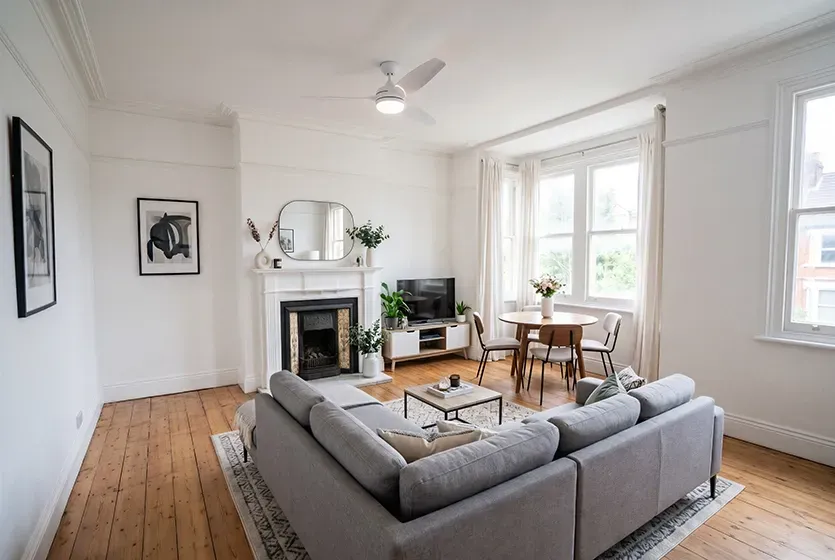
The "before" is an empty living room: bare floors, blank walls, nothing for a buyer to react to. The "after" has a sofa, rug, coffee table, art and soft furnishings, all matched to the style of the home. Suddenly the room has scale, warmth and a sense of how life would work in it.
The difference online is stark. Buyers scrolling Trade Me or realestate.co.nz pause on the styled image and skim past the empty one. Same room, same light, completely different response.
Tenanted room → restyled space
Not every property is empty. Plenty of investment properties are sold while tenanted, with furniture that does not show the home at its best.
Here the "before" is a furnished room — but with mismatched, dated or cluttered furniture. The "after" digitally removes those pieces and replaces them with styled alternatives, without anyone touching the tenant's belongings. The room looks fresh and well-presented, and the tenancy is never disturbed. We go deeper on this in can you virtually stage a tenanted or furnished home.
Renovation: showing the finished potential
For dated or mid-renovation homes, virtual staging can show buyers the destination rather than the building site.
The "before" is a tired kitchen, bathroom or living area. The "after" shows a modern, liveable version of the same space, so buyers can see past the current state to what the home could become. It pairs naturally with a "before and after" marketing story for do-up properties and deceased estates.
What virtual staging can and can't do
Before and after images are powerful, but honest expectations matter.
It can: furnish empty rooms photo-realistically, remove and replace existing furniture, refresh dated finishes, and match furniture to the property and buyer. Done well, the result is hard to distinguish from physical staging in a photo.
It can't (and shouldn't): change the actual structure, hide permanent defects, fake a view, or alter the property in ways that mislead a buyer about what they are getting. Virtual staging styles a space; it does not rebuild it. Keeping that line clear is both an ethics issue and a compliance one — see virtual staging disclosure and ethics.
That honesty is the point. The goal is to help buyers picture the home at its best, not to sell them something that is not there.
See it on your own listing
Before and after is most convincing on your own property. If you have a vacant, tenanted or dated listing coming up, virtual staging can show buyers what the space could be — usually with styled images back within 24 hours.
Start with the virtual staging service, or see what it costs in our virtual staging cost guide.
FAQs about virtual staging before and after
Does virtual staging look realistic in before and after photos?
Done well, yes. Furniture is placed with accurate scale, perspective and shadow, so the styled "after" looks physically staged rather than digitally added. The quality of the editing is what separates a convincing result from an obvious one.
Can you virtually stage a room that already has furniture?
Yes. Editors can digitally remove existing furniture and replace it with styled pieces — useful for tenanted properties or homes with dated furnishings, without disturbing anyone's belongings.
Can virtual staging show a renovated version of a dated room?
Yes. Renovation staging refreshes dated or mid-renovation spaces so buyers can see the finished potential. It works well alongside a before-and-after marketing approach for do-up properties.
Is it honest to use before and after virtual staging?
It is, as long as the images are disclosed as virtually staged and don't misrepresent the property — no hidden defects, no fake views, no structural changes. The aim is to show the space at its best, clearly labelled, not to mislead.