How to Sell Your House Privately in NZ (2026 Guide)
Selling privately saves you the commission. Most major Auckland agencies publish the same rate — 3.95% on the first $400,000, then 2% on the balance, plus GST — which comes to $31,970 on a $1 million sale. That's the appeal, and on a seven-figure asset it's a serious number.
The catch is that it's only a saving if the house sells for what it would have sold for with an agent. Commission works out to about 3.2% of the sale price, so an agent has to beat your result by roughly 3% to have cost you nothing at all.
What you take on is everything an agency would have handled in the background: pricing the property, telling you what to fix before it's photographed, producing the marketing, listing it, fielding enquiries, running viewings, and negotiating with a buyer who may well have an agent of their own.
I photograph Auckland listings, including for private sellers, so I see this process from an unusual angle. I'm not going to tell you whether to sell privately. That depends on your property, your timeline, and how much of this you actually want to do. What follows is what the process involves, in order, and where I see private sales come unstuck.
Step 1: Work out what it's worth
Get three independent reference points before you settle on a number.
A registered valuation costs $600 to $1,200 for a standard residential property, and takes three to seven working days. Complex or rural properties run $1,000 to $2,500. It's the most defensible figure you'll get, and the one a buyer is least likely to argue with.
Recent comparable sales in your suburb, same property type, last three to six months. Available free through the major property portals.
Appraisals from two agents. You can ask for these without listing. Read them knowing the incentive: an appraisal is partly a pitch.
Private sellers overprice more often than they underprice. Without an agent absorbing the emotional distance, it's difficult to separate what the house is worth from what it's worth to you. A property that sits unsold for eight weeks loses more than a realistic asking price would have.
Step 2: Get your legal side in order early
Talk to a lawyer or conveyancer before you list, not after you have an offer. Expect $1,300 to $2,200 for a standard residential sale, with GST and disbursements often on top.
You will need:
A sale and purchase agreement. Use the standard ADLS/REINZ form. Do not draft your own.
Your record of title, checked for anything unusual: cross-lease, unit title, easements, covenants.
A view on disclosure. You must not mislead a buyer, and you must disclose known defects. Getting this wrong is the one mistake in private selling that can follow you after settlement.
Settled.govt.nz is the government's own guide and worth reading in full. It's the authoritative source on your obligations, and it's free.
Step 3: Prepare the property
Standard advice applies and I won't labour it: declutter, deep clean, fix the small broken things, tidy the exterior, mow and edge.
One point that is specific to selling privately. With an agent, someone tells you when the house isn't ready to photograph. On your own, nobody does. Walk through with someone who will be honest with you, or ask your photographer. I tell vendors when a room isn't ready, because photographing it early wastes both our time.
Read: how to prepare a property for a real estate photo shoot
Step 4: Get proper listing media
This is the step private sellers skip, and it's the one that costs them the most.
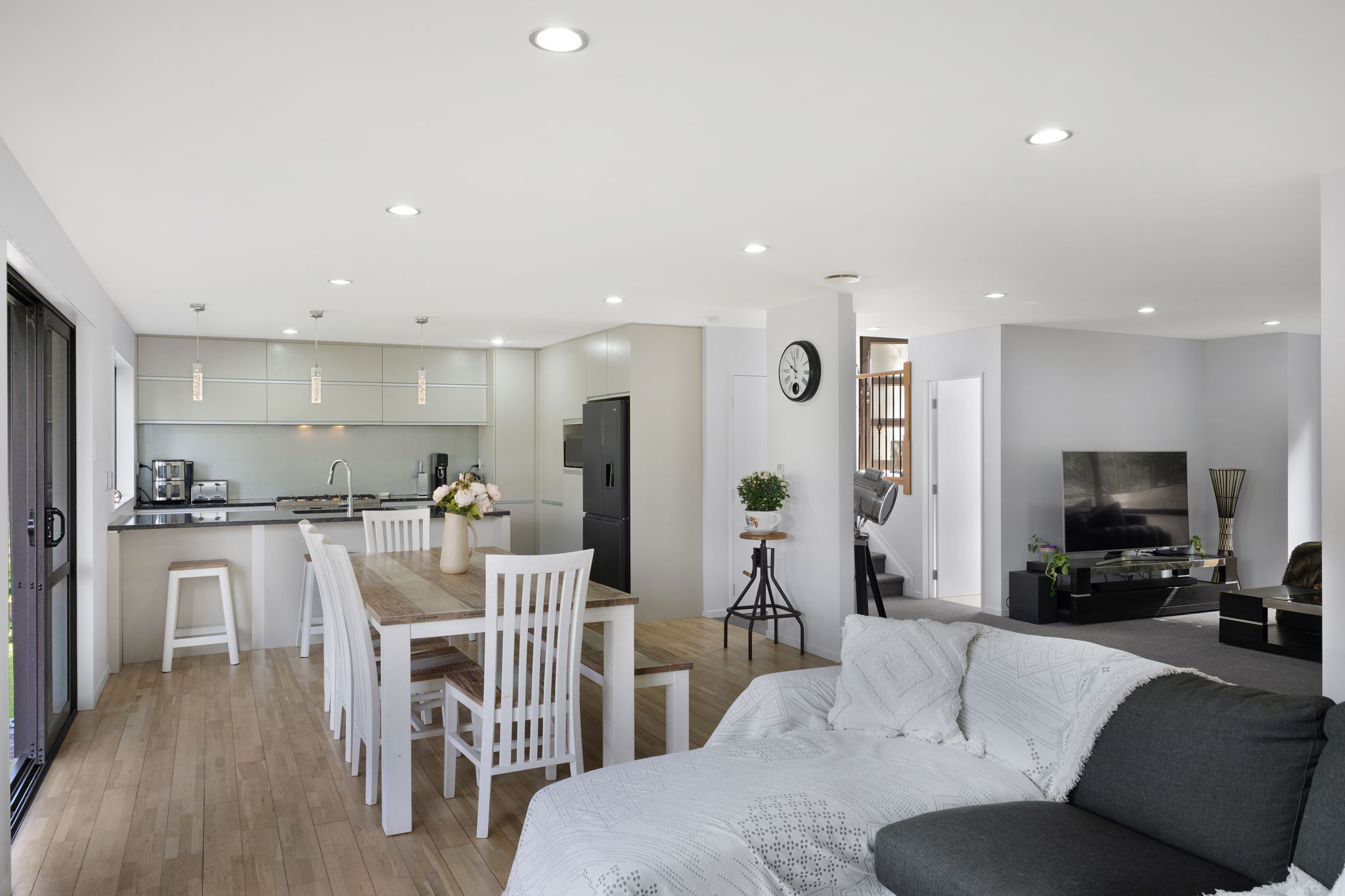
Here is the reality of how buyers behave. They see your listing on a phone, in a scroll feed, alongside twenty agency listings that were professionally photographed. They give it about two seconds. If the first image doesn't land, there is no second chance. They've already scrolled past, and no amount of accurate detail further down the page recovers that.
A private listing with phone photos doesn't read as "this vendor is saving on commission". It reads as "something is off with this property". That perception discount is invisible and it's usually larger than the media would have cost.
What you actually need
What it costs
Bash & Co listing packages start at $299 GST-inclusive, with aerial coverage included in every package. On a $1 million sale that's under 0.03% of the sale price.
If you'd rather build it piece by piece:
One practical note that matters more than it should: the free listing platforms cap your photo count. Listed.co.nz's free tier allows 15 photos, its $150 tier 25, and its $650 tier 50. Plan your shoot around the tier you're using. There's no point paying for 30 images you can't upload.
You do not need an agent to book any of this. Private sellers book directly, same as agencies do.
Compare listing packages · Build a quote for your property
Step 5: Choose where to list
Three realistic options, and they're not mutually exclusive.
Listed.co.nz
The main free private-sale platform in New Zealand.
Add-ons include HouGarden packages ($99–$249), auction services ($650–$895) and copywriting ($90–$135).
The Ultimate tier is the one worth understanding, because it's how most private sellers get onto Trade Me without dealing with Trade Me directly.
HomeSell
A fixed-fee service rather than a listing board. Two options:
HomeSell Go: from $1,199, paid upfront, commission-free. You run the sale, they handle the marketing mechanics.
HomeSell Pro: $2,500 upfront plus $10,000 on successful sale. A licensed agent handles negotiation while you manage viewings.
HomeSell Pro at $12,500 total sits between full agency commission and doing it entirely yourself. If negotiation is the part you don't want, that's the option to look at.
Trade Me Property
The largest property audience in New Zealand, and the one buyers actually browse. You can reach it directly or via Listed's Ultimate package.
A note on realestate.co.nz
realestate.co.nz is owned by REINZ and Property Page Limited, a consortium of New Zealand real estate agencies, and it's oriented to agency listings. In practice private sellers don't list there directly. Worth factoring into your decision, because it's a genuine reach limitation of selling privately.
Step 6: Write the listing
Three rules.
Lead with what's specific. "Three bedrooms, north-facing, walk to Mt Albert train" beats "stunning family home in sought-after location". Generic superlatives read as filler and buyers skim past them.
Answer the questions you'd ask. Land area, floor area, year built, rates, school zones, what's included in the chattels. Every question you leave unanswered is a reason to move on rather than a reason to enquire.
Be honest about the flaws. Buyers find them at the viewing anyway. Naming the small ones upfront builds enough credibility to carry the things you can't fix.
Step 7: Run the viewings
Open homes work better than private appointments for a private sale. A room with people in it creates the sense of competition that an agent would otherwise manufacture. Run them at consistent times, advertise them clearly, and keep a record of who attends.
Take names and numbers. Follow up within 48 hours. This is the part private sellers most often let slide, and it's where offers come from.
Two practical safety notes: don't run viewings alone, and put valuables away.
Step 8: Handle offers and negotiation
Every offer goes to your lawyer before you accept anything, without exception.
Expect buyers to test you. Some will assume a private seller is less informed and will open lower than they would with an agency. Having your valuation and your comparable sales in front of you is what makes it easy to hold your number.
Watch the conditions as closely as the price. A higher conditional offer with a long finance clause and a builder's report can be worth less than a lower unconditional one.
What private listings get wrong
The three I see most, in order of what they cost:
Phone photos. The single largest self-inflicted discount in a private sale.
No floor plan. Buyers can't picture the layout, so they don't book the viewing, and you never learn they existed.
Overpricing early. Four weeks at the wrong number, then a public price drop that signals weakness.
None of these are about effort. They happen because nobody in the process has the job of catching them.
Is selling privately worth it?
Run the numbers first. Selling a $1 million house through an agency costs roughly $36,000 to $50,000 all in. Doing it yourself costs somewhere between $2,900 and $15,000, depending on how much staging, reporting and platform reach you buy.
That comparison only holds if the house sells for the same price either way, and there's no guarantee it does. This is the part most private-sale guides skip.
Commission on a $1 million sale is about 3.2% of the price. So an agent only has to achieve around 3% more than you would to have paid for themselves. On a $1 million house that's $32,000, which sounds like a lot until you've watched two buyers bid against each other on a Saturday.
What that money is actually buying:
Pre-sale advice. A good agent walks through before anything is listed and tells you to repaint the hallway, replace the carpet in the third bedroom, or fix the deck. Some of that spend returns several times over. Some of it is simply the difference between a buyer picturing themselves in the house and picturing a weekend of work.
Pricing judgement. Setting the number, and knowing when to hold it and when to move.
Buyer access. An existing database, and the ability to create competition between buyers instead of negotiating with one at a time.
Negotiation without the attachment. You have lived in the house. That is harder to set aside than most vendors expect.
None of that disappears when you sell privately. It just becomes yours to supply, or to buy in piece by piece. The presentation advice is the most straightforward to replace, which is partly why I tell vendors when a room isn't ready to photograph rather than shooting it anyway.
Selling privately is worth it when you have time, a straightforward property, some tolerance for negotiation, and a realistic price. It's worth less when you're selling under time pressure, the property is unusual or hard to value, or you'd rather not manage the buyer relationship yourself.
The saving is real. So is the work, and so is the risk that a weaker sale price eats the difference. What decides it usually isn't the commission at all. It's whether you can do the parts the commission was paying for and land within about 3% of what an agent would have achieved. Read: the full cost of selling a house in NZ
Selling privately and want the listing to look like it isn't? Build a quote for your property or compare packages.
Frequently Asked Questions
Can I sell privately in New Zealand without an agent?
Yes. There's no legal requirement to use a licensed agent to sell your own property.
Can I list on realestate.co.nz privately?
Not in practice. It's owned by REINZ and a consortium of agencies and is oriented to agency listings. Trade Me Property is the main portal open to private sellers, reachable directly or through Listed's Ultimate package.
What does it cost to list privately?
Anywhere from free to $650 on Listed.co.nz depending on the tier, or from $1,199 with HomeSell. Add your listing media on top.
Do I still need a lawyer?
Yes. Conveyancing is not optional, and the sale and purchase agreement needs legal review.
How much should I spend on marketing a private sale?
Listing media from $299 covers photography, aerial and a floor plan. Add your platform tier on top. Spending less than that on a seven-figure asset is a false economy.
Can I get professional photos without an agent?
Yes. Private sellers book directly with Bash & Co, same as agencies.
Where these figures come from. Agency commission is from Barfoot & Thompson's published rate card. Seller obligations and disclosure requirements are from Settled.govt.nz. Platform pricing is from Listed.co.nz and HomeSell. Media pricing is our own. Everything else is a market range current at the time of writing.
Figures checked August 2026.