Prepare Your Home for Photos: 17 Ways to Attract Buyers
Buyers don't walk through your home first. They scroll past it. The listing photos are the open home now, and a home that photographs badly gets skipped before anyone's stood on the doorstep.
I shoot Auckland homes for a living, and here's what I've learned: the difference between a listing that stops the scroll and one that gets passed over is usually decided days before I turn up, in how the place was prepped. A tidy, well-lit, considered home photographs like the best house on the page. A cluttered one fights the camera the whole way.
So this isn't a generic spruce-up list. It's 17 ways to get your home ready to photograph well, written by the person holding the camera. Get these right and the photos do the selling for you.
1. Fix the small stuff the camera magnifies
The eye forgives a scuffed skirting board. The camera doesn't. In a high-resolution photo every crack, chip and smudge gets sharper, not softer. Walk the house and deal with the small jobs that quietly say "neglected":
Cracked or chipped tiles in the kitchen and bathrooms
Peeling or scuffed paint on doors, trim and skirting
Loose or missing cabinet handles
Cracked switch and outlet covers
Wobbly handrails or steps
Squeaky or sticking doors and windows
Dripping taps
Tired grout and silicone around sinks, baths and showers
A toilet that won't stop running
None of these is expensive. All of them show.
2. Clear every surface
Clutter reads as chaos through a lens, and it makes rooms look smaller than they are. Clear the benchtops, the bathroom counters and the windowsills. Tidy the wardrobes and storage too — buyers open them, and a good agent will want them photographed to show off the space. Decorative baskets and closed storage are your friend: hide the mess, don't just shuffle it.
3. Take down the personal photos
Family photos and the kids' artwork on the fridge pull the eye straight to them in a picture, and they stop a buyer imagining themselves in the space. Take down the personal photos, the certificates and the fridge gallery. You want the buyer picturing their life there, not studying yours.
4. Go neutral and light on the walls
Soft, neutral walls photograph bright and let the home read as a blank canvas. A bold feature wall might look great in person, but on camera it can throw a colour cast across the whole room and date the space. If you're painting before you sell, keep it light and warm.
5. Get every light working, and matched
This one's pure photographer. Mismatched bulbs wreck a photo: one warm bulb and one cool bulb in the same room photographs as patchy pools of orange and blue. Replace every blown bulb, and match the colour temperature across each room — warm white is the safest bet. Then the whole house glows evenly instead of looking like a fault report.
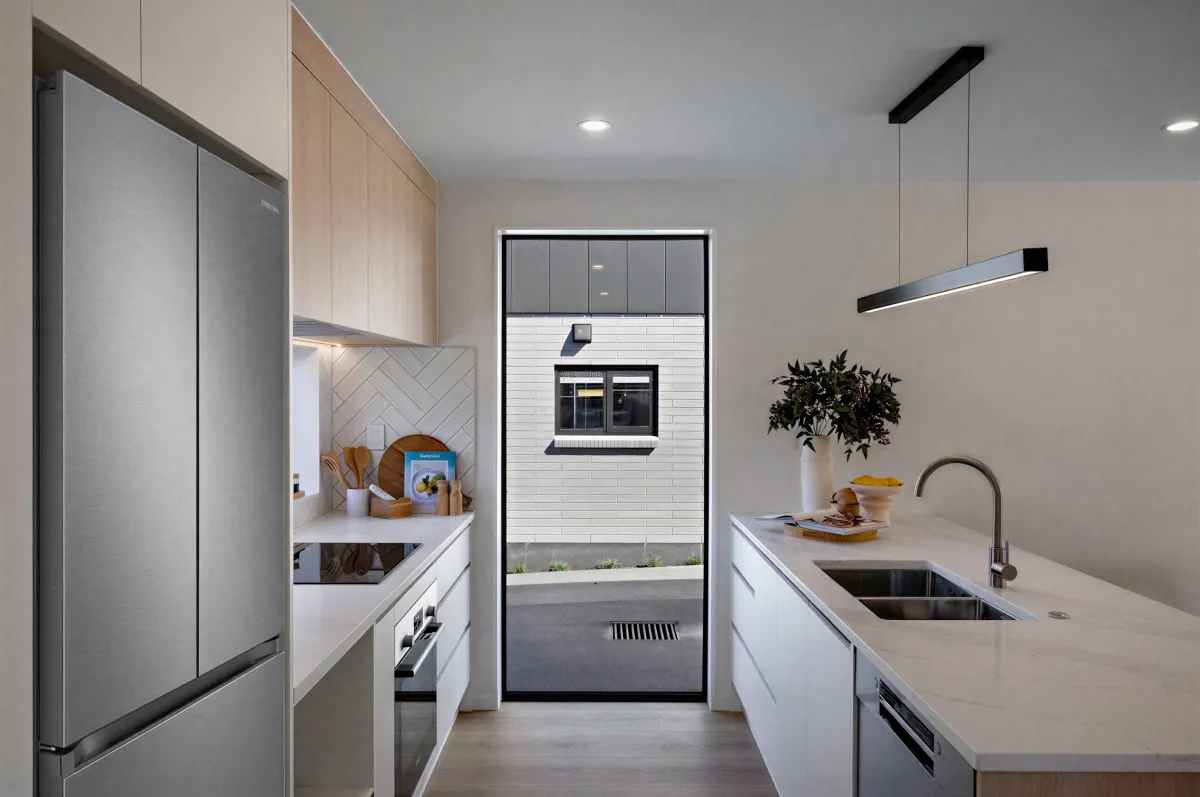
6. Style the kitchen, clear the benches
The kitchen sells the house, and it's almost always the hero shot. Strip the benchtops back to one or two styled pieces — a board, a bowl of fruit, a single plant. The toaster, the dish rack, the jars and the bin all go away. Polish the tapware and splashback so they don't photograph with smears. A clear, styled kitchen is the single biggest before-and-after most sellers can make.
7. Give every room one clear job
A camera needs a room to read as one thing. The space that's half-office, half-spare-room, half-storage photographs as confusion, and buyers can't tell what they're looking at. Decide what each room is — bedroom, office, nursery — and set it up to say so.
8. Make the beds and style the bedrooms
Bedrooms photograph flat and cold without a bit of layering. Crisp linen, ideally white, a couple of cushions, clear bedside tables, and floors free of washing and shoes. Beds made, every time. A styled bed is the difference between a bedroom that looks like a hotel and one that looks like a flat-share.
9. Open the home up to the outdoors
This is the one that sells here, and most sellers underplay it. Auckland buyers want indoor-outdoor flow, so show it. Open the ranchsliders, set the outdoor table, clear the deck, and let the lawn read as another living room. The shot of the kitchen flowing out to a sunny deck is often the most powerful image in the whole listing.
10. Tidy the section, for the ground shot and the air
First impressions start at the kerb. Mow and edge the lawn, clear the driveway and paths, tidy the entrance, and put a couple of healthy pots by the door. It matters even more from above: if your listing includes an aerial shot, the lawn, the roofline and the boundaries are all on display, and a patchy section shows from the air.
11. Clean like the camera's coming, because it is
A lens shows everything — smears on the glass, dust on the shelves, marks on the walls, cobwebs in the corners. Windows matter most: clean glass photographs invisibly, dirty glass flares and dulls the light. Deep-clean before shoot day, and pay attention to the spots you usually skip — skirting, light fittings, the insides of the windows. Weighing up whether staging is worth the spend? Our article on home staging vs virtual staging covers the options, including a cheaper digital route.
12. Sort damp, odours and ventilation
Auckland buyers are switched on about damp, and for good reason. A musty smell won't show in a photo, but it'll kill the viewing the photo earned — and visible mould absolutely shows on camera. Air the house out, run a dehumidifier, get the carpets professionally cleaned, and wipe down any mould on window reveals and in wardrobes. A warm, dry, fresh-smelling home does the rest of the work.
13. Add a little fresh greenery
A few plants or a single arrangement of fresh flowers add life and colour that photographs beautifully. A styled stem on the bench, a plant by a window with good light. Keep it restrained — you're adding a touch of life, not building a florist.
14. Plan the shoot around the light
Open every curtain and blind, clean the glass again, and think about when each main room gets its best light. A north-facing living room shot at the right time of day is a completely different photo to the same room in flat afternoon shade. A good photographer plans the running order around the sun, so help them by knowing which rooms shine when.
15. Stage it, or virtually stage it
Empty rooms photograph cold and make it hard for buyers to judge scale, and tired, mismatched furniture dates a home fast. If the house is lived-in and well-furnished, a tidy-up is enough. If it's vacant or the furniture's working against you, virtual staging drops furniture in digitally so buyers can read the space, without the cost of hiring the real thing.
16. Do a final walk-through as the camera
Right before the shoot, walk the house the way it'll appear in a photo. Bins out of shot, toilet lids down, charging cords and remotes hidden, cars off the driveway, pet bowls and beds tucked away. These are the small things that wreck an otherwise great photo, and they're free to fix.
17. Book proper photography and a floor plan
All of this prep exists to land in the photos. Once the home's ready, professional real estate photography and a clear floor plan are what buyers actually shortlist from. Sharp, well-lit images stop the scroll, and a floor plan answers the question every serious buyer asks next: does it actually work for us? It's the payoff for every other tip on this list. Related: why you need professional real estate photos.
Do the work before the shoot, not after the listing's gone live. A home that's been prepped properly photographs like the best house on the page — and on a listing site, the best house on the page is the one that gets the viewings. When you're ready to show your home at its best, that's what we do, with photos back within 24 hours.
Frequently Asked Questions
How do I prepare my home for real estate photos?
Start with repairs and a deep clean, then clear every surface, take down personal items, and let the light in. Make the kitchen and bedrooms the priority — they're the rooms buyers judge hardest. The goal is a tidy, bright, considered home that photographs like the best house on the listing page.
How long does it take to prepare a home for a photo shoot?
For most homes, a focused day or two covers the repairs, decluttering and deep clean. If you're painting, restyling or arranging staging, give yourself one to two weeks. The prep is what the photos reward, so it's worth not leaving it to the night before.
Should I get my home professionally staged before photos?
If your home is well-furnished and tidy, a thorough declutter and restyle is usually enough. Staging earns its keep when a home is vacant, sparsely furnished, or the existing furniture is dating the space. For empty listings, virtual staging is a lower-cost way to help buyers read each room.
What's the most common mistake sellers make before a photo shoot?
Leaving the benches and surfaces cluttered. Clutter shrinks rooms and pulls the eye away from the features that sell the home. A close second is mismatched or blown light bulbs, which photograph as patchy, off-colour rooms no matter how good everything else looks.
Do I need a floor plan as well as photos?
Yes. Photos make a buyer want to see the home; a floor plan tells them whether it works for them before they book a viewing. Listings with both attract more qualified enquiry, because buyers can picture the layout, not just the rooms.