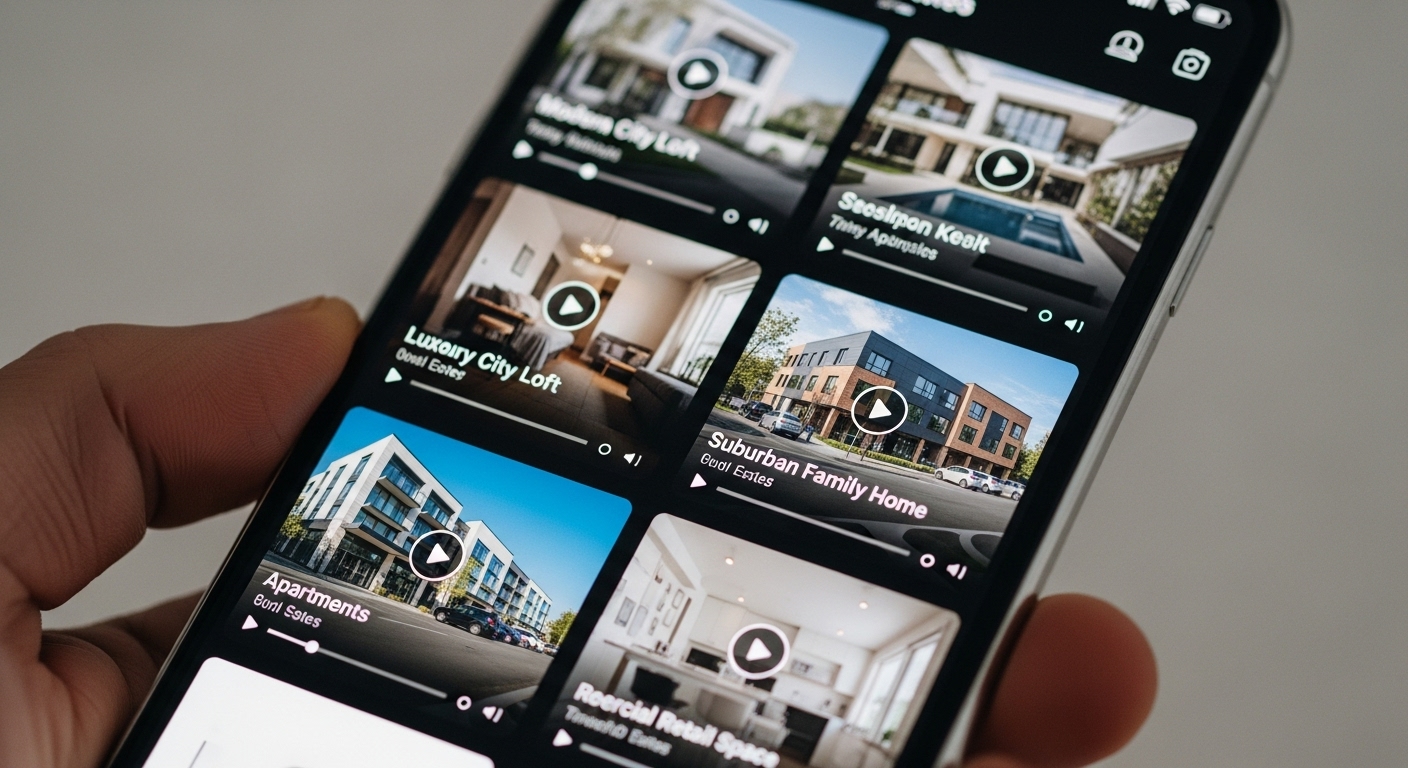
Why Your Real Estate Videos Aren't Getting Views
For years, agents were told their marketing wasn't there to sell the listing in front of them. It was there to win the next one. Video sat at the top of that brief — a signal of professionalism aimed at the next vendor more than the current buyer.
That brief no longer holds.
Buyers in 2026 (especially on social media) can at times evaluate properties through video before they evaluate them through anything else. They scroll listings on Trade Me at night. They compare suburbs on TikTok at lunch. They form an opinion on liveability, layout, and feel before they ever "request a viewing". When a video underperforms now, it doesn't just cost you a future listing. It costs you enquiry on the one you're actively working.
Below are the seven reasons real estate videos fail to get views, and what to do about each. None of them are about Hollywood production budgets. All of them are within reach of any agent who is willing to think about the video as a piece of content, not a deliverable.
1. The first three seconds aren't doing any work
Buyers decide whether to keep watching in the time it takes to read this sentence. If your video opens with a slow drone rise, a logo animation, or a quiet establishing shot with no context, you've lost them before the property has had a chance to speak.
The fix is to lead with substance. Open with a sentence that gives the viewer a reason to stay.
"Here's what $1.1m gets you in Birkenhead."
"A first-home option ten minutes from the train station."
"Two living zones, both of them genuinely usable."
"Walk to the village, walk to the beach — and the price might surprise you."
The pattern is the same in every case. State the value of the property in plain language. Buyers stay for clarity. They scroll on vagueness.
2. The video was built for desktop, but buyers are watching on their phone
Most listing videos are still produced as if buyers will encounter them on a 27-inch monitor with the sound on. They are wide, slow, quiet, and built around long shots that take time to read.
Buyers in NZ watch property video the same way they watch everything else. Vertically. Sound off. In short bursts. On Instagram and TikTok before they ever land on Trade Me.
When the format of the video doesn't match the way buyers consume it, the view count stays low and the engagement stays lower. The fix is to produce a mobile-first version of every listing video in addition to the standard horizontal cut.
A strong vertical cut is 9:16, between 30 and 45 seconds, with quick cuts and on-screen text calling out the features that matter. It needs to work without sound, because most viewers will never enable it. The horizontal version still has its place on the listing portals. It just isn't the version that drives reach.
This is also the format that tends to get clipped further down into 15-second teasers for stories or paid ads. Build the 30-45 second cut first, and the shorter cuts come out of the same edit.
3. You're showing the home, not telling the story
A room-by-room walkthrough that names what the buyer can already see is not a story. It's a tour. A tour shows the bedroom and moves on. A story explains why the bedroom matters to a specific kind of buyer.
The properties that get views are the ones where the agent has thought about who the buyer is and what the home offers them. Lifestyle context turns a feature into a reason. Buyers don't remember the granite benchtop. They remember the line "this is the kitchen the family hosts Christmas in".
Useful narrative cues for NZ listings tend to fall into a few patterns:
"Families will appreciate having two living zones — one for the kids, one for the grown-ups."
"Downsizers love how low-maintenance the section is."
"First-home buyers, this is walking distance to the village."
"Investors, this is a ten-minute drive to two universities."
Pick the buyer the property is actually for, then write the line that names them. The script does this work in advance. We've covered exactly how to write one in How to Write a Real Estate Video Script That Sells in NZ and Real Estate Video Script Templates: 5 Proven Formats for NZ Agents.
4. You're not on camera
I'd encourage every agent to be on camera in their listing videos. It's not a hard rule, but a video that features the agent carries the property's story in a way a voiceover-only cut doesn't. Buyers connect with the person walking them through the home, not just the home itself.
The agent presence also doubles the asset. The same video that markets the listing markets the person selling it. Over a year, twenty listing videos with the agent on camera build a body of brand content that shows up in every future referral conversation.
You don't need to feature for the full sixty seconds. Five to ten seconds is enough. A short intro at the start, a comment on a key feature halfway through, a sign-off at the end. Even one of those three lifts the video meaningfully.
If you're genuinely uncomfortable on camera, a strong voiceover or an unnarrated cut still produces a good property video. But if the choice is between trying it and avoiding it, my advice is to try it. I coach agents through delivery, framing, and pacing on the day, so you don't have to walk in knowing what to do.
For more on how on-camera presence ties into the broader brand strategy, see our personal branding service.
5. The technical quality is dragging the video down
Most buyers will not articulate what's wrong with a video that doesn't feel right. They will scroll. The signals that produce that scroll are usually small and specific.
Overexposed windows that read as white blocks. Shaky handheld footage. Dark interiors that haven't been lifted in the edit. Audio that picks up traffic from outside. Flat colour that makes the home look beige. A pace that lingers too long on shots that aren't earning their seconds.
None of these are creative failures. They are technical ones. They are also fixable, either by the agent who shoots their own content or the production crew who shoots it for them.
The bar isn't Hollywood. The bar is consistency. Smooth movement, even lighting, balanced exposure on windows and interior in the same shot, natural colour, a pace that respects the viewer's time, and clean audio if anyone speaks. Hit those six and the technical floor is no longer the reason buyers are scrolling.
6. The video is only living on one platform
A real estate video uploaded to Trade Me and nowhere else is a video doing a fraction of its potential job. Buyers are everywhere. So are the prospective vendors who will judge you by what your previous listings looked like online.
Distribution is what turns a single video into a marketing asset that compounds. The minimum distribution stack for an Auckland listing is broader than most agents run by default.
Trade Me listing page
realestate.co.nz listing page
homes.co.nz listing page
oneroof.co.nz listing page
Your agency's listing page
Instagram Reels (vertical cut)
Facebook Reels (vertical cut)
TikTok (a 15-second teaser cut from the vertical edit)
LinkedIn (especially for higher-end listings and personal brand reach)
Email to your buyer database
Vendor reporting (showing the video and its reach is a credibility asset for the next listing meeting)
Your own website or YouTube channel if you have one
Each platform reaches a different mode of buyer. The portals reach buyers who are actively searching. Instagram and TikTok reach buyers who weren't looking but are open to being moved. LinkedIn reaches buyers and vendors at the same time. Email reaches the warm list you've already built. None of them replace the others.
If you're commissioning video and only using it on the listing portal, the cost-per-view is worse than it has any reason to be. Plan distribution before you book the shoot.
7. The video isn't speaking to a specific buyer
Hedging the message feels safe. It rarely is. A video that tries to appeal to first-home buyers, families, investors, and downsizers in the same forty-five seconds appeals to none of them in particular.
Different buyers want different things from a property. First-home buyers want affordability and proximity. Families want zones, schools, and storage. Investors want yield and tenancy appeal. Downsizers want low maintenance and walkability. When the script tries to cover all four, the video says nothing distinctive about any of them.
The fix is to pick a buyer and write the video for them. Name them in the opening hook. Reinforce them in the narrative cues. Close with a line that confirms the home is for them.
That choice doesn't exclude other buyers. It gives the video a centre of gravity that makes it work for the buyer it's aimed at, while still leaving room for everyone else to see themselves in the home if it suits them. Specificity is what cuts through noise. Generic doesn't get views.
A real estate video performance checklist
Before you brief, shoot, or upload a listing video, run it through this list.
A strong hook in the first three to five seconds
Vertical (30-45s) and horizontal (60-90s) versions cut from the same shoot
Quick pacing, with no shot lingering longer than it earns
On-screen text that works with the sound off
A lifestyle-led message, not a feature checklist
A specific buyer named in the script
The agent on camera for at least five seconds
Clean lighting, balanced exposure, natural colour
Smooth movement and audio that holds up
Distribution across Trade Me, realestate.co.nz, homes, oneroof, Instagram, Facebook, TikTok, LinkedIn, your database, and your vendor reports
If you're hitting most of this list, your views won't just rise. Your enquiry will. So will your standing with the next vendor who looks at your last campaign and decides whether you're the agent they trust to run theirs.
For a deeper look at when video is the right call for a listing in the first place, see When to Use Real Estate Video on a Listing (and When to Skip It). And if you're ready to commission a video for your next campaign, the video service page covers what's included and the pricing page lays out what it costs.
Frequently Asked Questions
Why are my real estate videos not getting views?
The most common reasons are a weak hook in the first three seconds, a video built for desktop when buyers are watching on phones, no narrative for a specific buyer, and distribution limited to the listing portals. Most underperforming videos have at least three of those four issues at once.
How long should a real estate listing video be?
For social media (Instagram, Facebook, TikTok), 30 to 45 seconds in vertical format. For Trade Me and realestate.co.nz, 60 to 90 seconds in horizontal format. The smartest workflow is to film once and have both formats cut from the same shoot.
Should agents appear on camera in their listing videos?
Yes, in most cases. A short on-camera moment of five to ten seconds builds trust with buyers, makes the video distinctive against generic competitor content, and turns the listing video into personal brand content the agent benefits from for years. It's not mandatory, but it's the recommendation.
Are vertical videos better than horizontal for real estate?
For social media, yes. For listing portals, horizontal still works. Most agents need both formats — and both can be cut from a single shoot, which is why we deliver listing-ready 16:9 and social-ready 9:16 from every Bash & Co video session.
What's the biggest mistake agents make in property videos?
Trying to appeal to every buyer at once. A generic video aimed at "everyone" is a video aimed at no one. Naming the specific buyer the property is for — first-home, family, investor, downsizer — gives the video a centre of gravity it otherwise lacks.
How do I get more engagement on my real estate videos?
Lead with a strong hook in the first three seconds. Cut a vertical version for social. Add on-screen text. Tighten the edit. Include the agent on camera, even briefly. Distribute across at least Trade Me, realestate.co.nz, Instagram, Facebook, and your buyer database. Each one of those moves engagement up. Stack four or five of them and the difference is meaningful.
How much does a real estate video cost in Auckland?
Pricing depends on property size, the number of formats delivered, and turnaround. Bash & Co publishes pricing transparently on the pricing page. As a working benchmark, a single-format listing video for a standard residential property starts at $319, with multi-format and larger-property pricing scaling from there.