How to Prepare Your Property for a Photo Shoot (Auckland)
A professional photographer can make your listing look exceptional — but only if the property is ready when they walk through the door. The difference between a good set of listing photos and a great set often comes down to what happened in the 24 hours before the shoot.
This is the guide you send your vendor a couple of days before the shoot. It covers what needs to happen room by room, what most people forget, and what makes the biggest difference to the final images. If you have already worked through the broader preparation — decluttering, repairs, painting — this is the last mile.
Why the last 24 hours matter more than you think
Your photographer is working on a schedule. Most listing shoots take 45–75 minutes on-site, depending on the size of the property. Every minute spent moving a bin, closing a toilet lid, or waiting for a vendor to clear a bench is a minute not spent finding the best angle of the kitchen or waiting for the right light in the living room.
A property that is photo-ready when the photographer arrives gets better images. Not because the photographer works harder, but because they can spend their time on composition, lighting, and the details that make a listing stop the scroll, instead of working around obstacles.
Professional real estate photography already helps listings sell 32% faster and attract 118% more online views. Preparation is how you make sure that investment pays off fully.
The exterior: what buyers see first
The front exterior is almost always the hero image of the listing — the one that appears as the thumbnail on platforms like Trade Me, realestate.co.nz, or homes.co.nz. Getting the outside right sets the tone for the entire shoot.
Move vehicles off the driveway
Cars, trailers, caravans, boats — anything parked in the driveway needs to be moved before the photographer arrives. A car in the driveway blocks the house, makes the frontage look smaller, and forces awkward cropping. Park down the street or around the corner. If the vendor has a boat or trailer they cannot move, let the photographer know in advance so they can plan angles around it.
Hide the bins
Rubbish bins and recycling bins are one of the most common things left in shot. Move them to the garage, behind the house, or inside a fence line where they will not be visible from the street or from above. Remember that aerial photography captures the full property from overhead — bins sitting beside the house will show up in drone shots too. On that note, try to avoid booking a shoot on your street's collection day. You can move your vendor's bins, but you cannot move the neighbours' — and a row of wheelie bins lining the street will show up in every aerial shot of the property and surrounding area. Timing matters beyond bin day — our article on the best time to photograph a property covers how sun direction, weather and tide decide the ideal window."
Clear toys, hoses, and garden tools
Bikes, scooters, trampolines, garden hoses left on the lawn, and tools leaning against the fence all create visual clutter. The goal is a clean, uninterrupted view of the house and its landscaping. If it cannot be moved, tuck it out of the camera’s line of sight.
Mow the lawn and sweep the paths
A freshly mowed lawn photographs noticeably better than one that is overdue. If the vendor can mow the day before the shoot, the difference in the exterior images is significant. Sweep any leaves or debris off paths, decks, and patios. Hose down concrete if it looks weathered.
The interior: room by room
Interior photography uses wide-angle lenses that capture more of the room than you see standing in the doorway. This means things at the edge of the frame — a cluttered bench, a bin tucked beside the fridge, a stray towel on a hook — will be visible in the final image even if they do not feel noticeable in person.
Kitchen
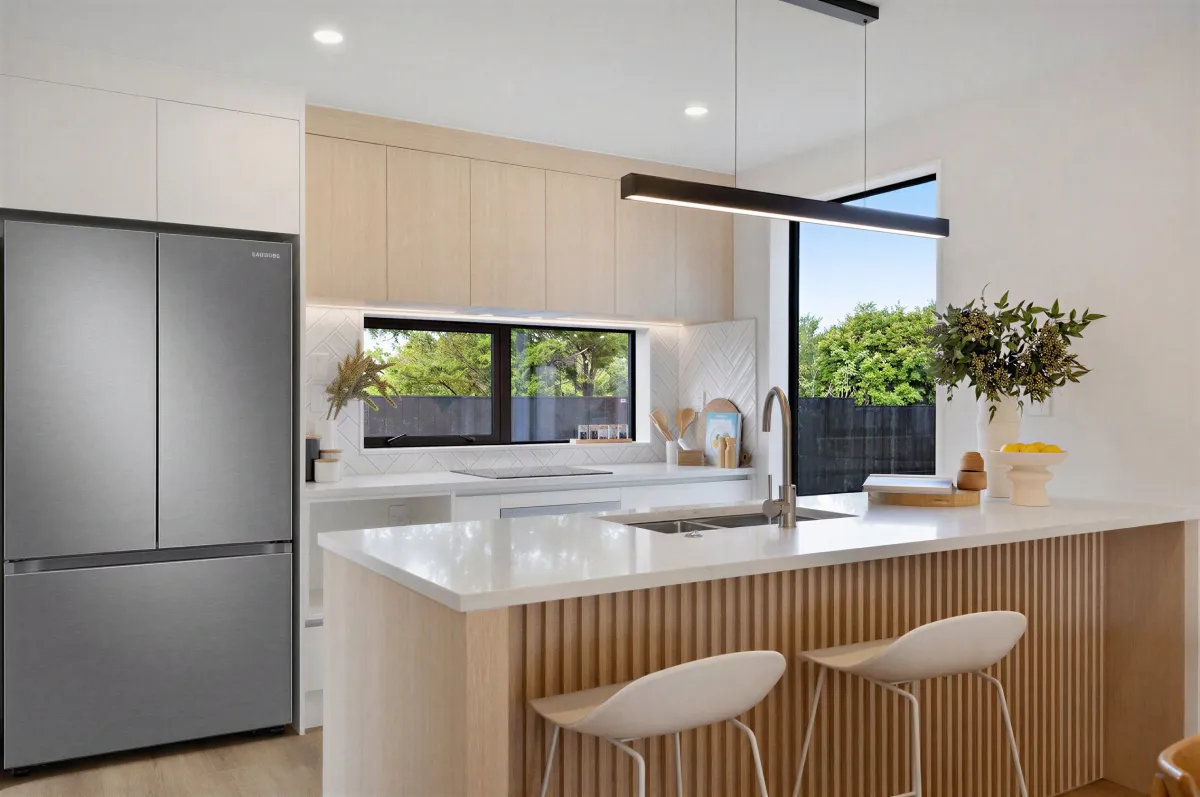
Clear the everyday clutter from bench surfaces. Toasters, kettles, knife blocks, soap dispensers, sponges, dish racks, and mail piles all need to come off. What stays is intentional — a vase of fresh flowers, a fruit bowl, a small grouping of styled items that adds warmth without crowding the space. The test is simple: if it looks like someone left it there, it goes. If it looks like someone placed it there on purpose, it stays.
Hide the bin. If the kitchen bin is visible, move it to the garage or a cupboard for the duration of the shoot.
Close all cupboard and pantry doors. Open doors look messy in wide-angle shots and break the clean lines of the kitchen.
Clean the sink. An empty, dry sink photographs far better than one with dishes, a sponge, or standing water.
Living areas
Remove personal photos and kids’ artwork from the fridge and walls. Buyers need to imagine their own life in the space, not see someone else’s.
Straighten cushions and fold throws. Small styling details register in photos more than you would expect.
Hide remotes, cables, and charging cords. Tuck them behind the TV or inside a drawer. Cables on the floor or draped over a coffee table are distracting in wide shots.
Remove tissue boxes, magazines, and anything sitting on surfaces. The less there is on a coffee table or side table, the larger and cleaner the room feels in the photo.
Bedrooms
Make the beds properly. Smooth, flat bed linen with plumped pillows is non-negotiable.
Clear the bedside tables. Remove books, water glasses, phones, chargers, and medication. Leave one lamp per bedside table and nothing else.
Close wardrobe doors. Open wardrobes draw the eye to clutter and make the room feel smaller.
Bathrooms
Remove all personal items. Shampoo bottles, razors, toothbrushes, soap, hair products — all of it goes into a bag under the sink or into the car for the duration of the shoot.
Close the toilet lid. This is forgotten more often than any other single item. Close every toilet lid in the house.
Hang fresh towels. If the existing towels are faded or mismatched, a set of plain white towels makes a noticeable difference in the photos.
Wipe down mirrors and glass. Fingerprints and water spots on mirrors show up clearly in HDR photography, which captures a wider range of detail than the eye notices in person.
All rooms
Turn on every light in the house. Every ceiling light, every lamp, every under-cabinet light, every outdoor light. Even during the day. The photographer blends multiple exposures to balance natural and artificial light, and having all lights on creates a warm, even glow throughout the property.
Open all curtains and blinds. Natural light flooding into the room is the foundation of good interior photography. Open everything unless the photographer specifically asks you to close something.
Turn off all screens. TVs, computer monitors, and tablets create bright rectangles that are distracting in photos and difficult to remove in editing. Turn them off or unplug them.
Pets and people
Pets need to be off the property during the shoot. Not just out of the room — off the property entirely, or securely contained in one area the photographer will not need to enter. Dogs that follow the photographer from room to room, cats that sit on kitchen benches, and birds that call out from another room all create problems that slow down the shoot and can end up in the photos.
Remove pet beds, food bowls, water bowls, toys, and litter trays from any room that will be photographed. Even if the pet is not there, the evidence of a pet makes the space feel less neutral for buyers.
People should also be out of the property if possible. Wide-angle photography captures reflections in mirrors, glass, and TVs — and people standing in an adjacent room often appear in these reflections without realising it.
What about the weather?
Auckland weather is unpredictable, and your photographer knows this. Professional real estate photographers include sky replacement as a standard part of their editing workflow, so an overcast sky on shoot day will not affect your exterior images — the sky will be replaced in post-production with a clean blue sky or natural cloud formation.
Heavy rain is a different situation. If it is actively raining, wet driveways, puddles on paths, and water on windows will be visible in the images and cannot always be edited out cleanly. Most photographers will contact you to reschedule if rain is forecast. At Bash & Co, we do not charge rescheduling fees — we would rather wait for the right shoot window and deliver images that do the property justice.
A quick checklist to send your vendor
Copy this list and send it to your vendor ahead of the shoot. It covers everything above in a format they can work through room by room.
Exterior
Move all cars off the driveway and out of street view
Hide rubbish and recycling bins (remember drone shots see from above)
Clear toys, bikes, hoses, and garden tools
Mow the lawn and sweep paths, decks, and patios
Kitchen
Clear all bench surfaces completely
Hide the kitchen bin
Close all cupboard and pantry doors
Clean and empty the sink
Living areas
Remove personal photos and artwork
Straighten cushions, fold throws
Hide remotes, cables, and chargers
Clear coffee tables and side tables
Bedrooms
Make beds neatly with smooth linen
Clear bedside tables
Close wardrobe doors
Bathrooms
Remove all personal products
Close every toilet lid
Hang fresh, matching towels
Wipe mirrors and glass
Whole house
Turn on every light (ceiling, lamps, under-cabinet, outdoor)
Open all curtains and blinds
Turn off all TVs and screens
Remove pet beds, bowls, toys, and litter trays
Secure pets off the property
The payoff
None of this is complicated. The interior checklist — lights on, benches clear, beds made, personal items packed away — takes most vendors 30 to 45 minutes on the morning of the shoot. The exterior work (mowing, sweeping paths, moving bins and vehicles) is best done the day before so the property is ready to go when the photographer arrives.
A well-prepared property gives your photographer the time and space to do their best work. And when the photos are strong, everything downstream gets easier: more clicks on Trade Me, better-qualified open home attendees, faster offers, and a vendor who sees exactly the level of professionalism they expected when they chose you.
Ready to book? See our photography packages and pricing, book your next shoot directly, or check the media cost before you book.
Frequently asked questions
How long before the shoot should the vendor start preparing?
Most of the tasks in this checklist can be done in 30–45 minutes on the morning of the shoot. If the property needs a deeper clean or the lawn needs mowing, allow 24 hours. For broader preparation like decluttering, minor repairs, and painting, start at least one to two weeks before the listing date.
Should I turn on the lights even if it is a sunny day?
Yes. Professional real estate photographers blend multiple exposures to balance natural and artificial light. Having every light on creates a warm, even glow that makes interiors feel bright and inviting. Even on a sunny day, rooms without lights on can look flat or shadowy in the final images.
What happens if it rains on the day of the shoot?
Light overcast is not a problem — your photographer includes sky replacement as a standard part of their editing workflow. Heavy rain is different, because wet surfaces and puddles are harder to remove in post-production. Most photographers will contact you to reschedule. At Bash & Co, there is no charge for rescheduling due to weather.
Do I need to be at the property during the shoot?
You do not need to be there, but your photographer will need access to the property. If the vendor is home, ask them to wait in one room (ideally the garage) so they are not visible in photos or reflections. Wide-angle lenses capture more of the space than you expect, including reflections in mirrors and glass.
What if the vendor cannot remove their pets?
If pets cannot leave the property, secure them in one room that will not be photographed (a garage or laundry works well). Remove all pet accessories — beds, bowls, toys, litter trays — from every other room. The goal is for the photos to feel neutral so buyers can imagine their own life in the space.